
Nicola Moss
Curator, National Mining Museum Scotland and Museums for Climate Justice Steering Group member
Flow is an exhibition at the University of Dundee that delves into the environmental and social significance of water in Scotland by exploring various questions: why are we having more extreme floods? Are our rivers polluted? Is our drinking water supply safe?
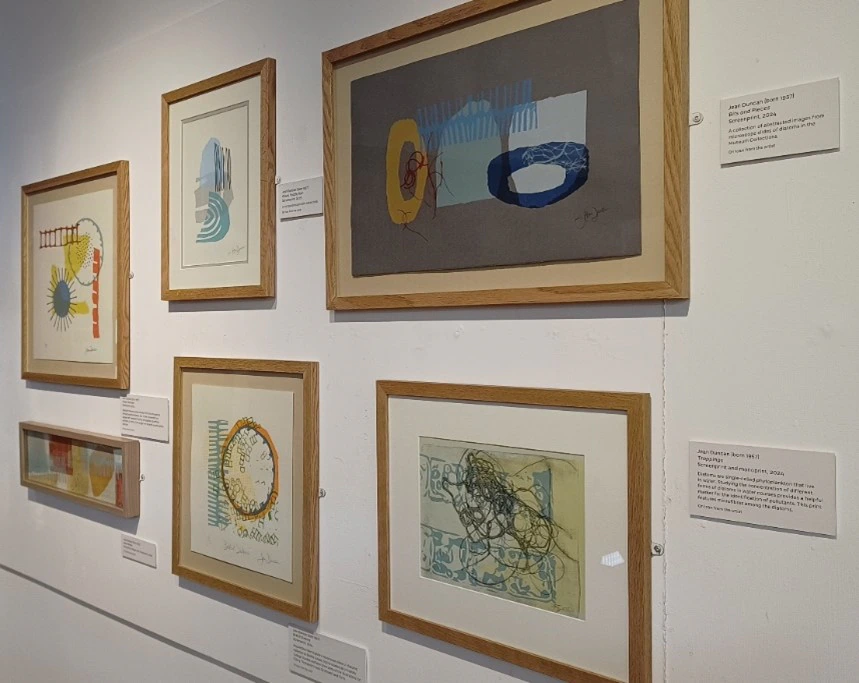
Jean Duncan, artist in residence at the Unesco Centre for Water Law, Policy and Science, explores possible answers to these questions through Flow by producing and presenting a series of artworks in response to these themes, developed in part by examining historic environmental records within the University of Dundee’s archives. Flow also exhibits related art and artefacts from the university’s museum collection which together provide an encompassing view of the significance and impact of water in Scotland.
The university’s archives have been utilised extensively to explore these questions. To understand the present and be able to fully prepare for the future, we must understand our past and how this has led us to where we are now.
Understanding historical weather patterns through research, such as the rainfall records of Peter Carmichael of Arthurstone, can provide us with a detailed understanding of the climate of the past, how different it is to the present day, and how these changes may have a bearing on our future world.
“I find archives inspiring for a range of reasons, I particularly love the way they are wrapped in bundles and tied with cotton tape, hinting that the paper is fragile and the contents special. Archives often include personal letters telling a story that makes it all the more relevant. This gives me a context, I don't try to illustrate the history, but it definitely motivates me to look more closely.”
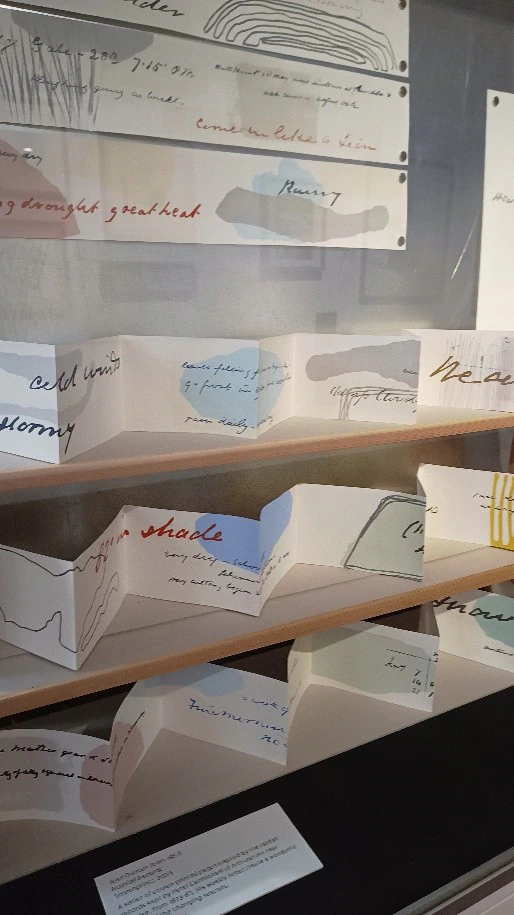
The university’s archives have not only provided research materials but also inspiration for the artist in residence to create her series of artworks.
Advertisement
The rainfall records kept by Peter Carmichael, as mentioned above, included weekly notes which offer an understanding of the changing seasons. Jean Duncan, inspired by these records, developed a series of screen-printed pages offering a new life to these records through her visual interpretation.
Some artworks by Jean Duncan were inspired by Helen Ogilvie’s microscopic slides of diatoms. Diatoms remove carbon dioxide from the atmosphere through photosynthesis: this is then converted into oxygen and released into the atmosphere. Scientists estimate that 20-50% of the oxygen we breathe is produced by diatoms.
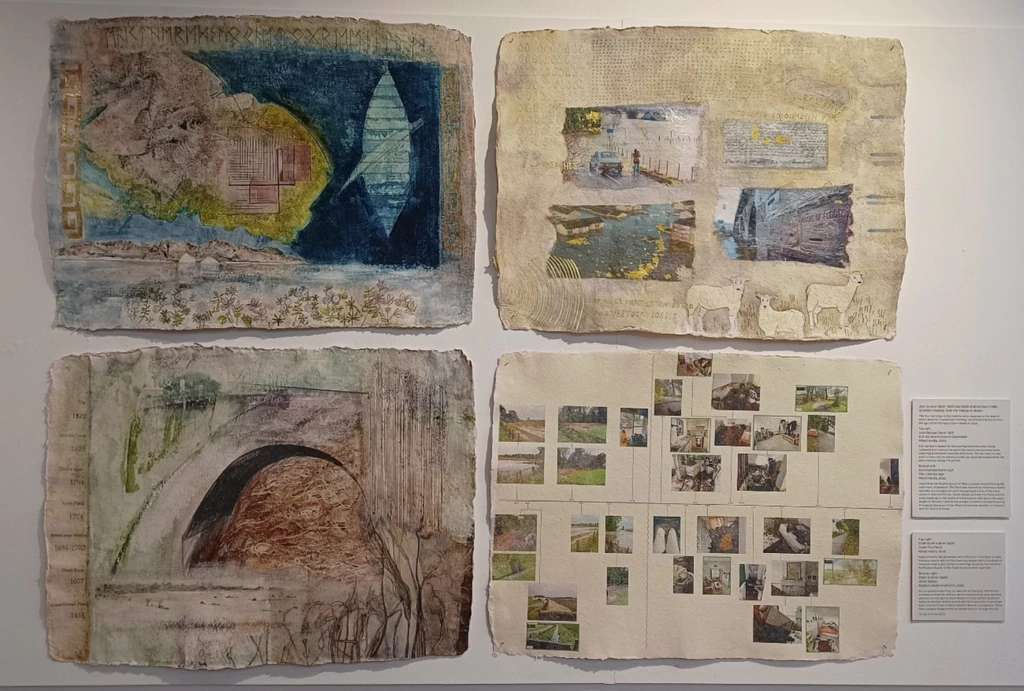
Jean Duncan collaborated with professor Alastair Dawson and PhD researcher Eilidh Guthrie to develop four paintings which explore how weather – and flooding in particular – has affected Scotland from the age of the Vikings to the present day.
The first painting inspired by the medieval warm period touches on the story of ‘Erik the Red’ and how he discovered Greenland due to a warmer climate, fewer storms and less sea ice to navigate. The next painting in the series focuses on the ‘Little Ice Age’, where melting snow was associated with numerous major river floods, and wet summers led to crop failures and famine.
The third painting examines the Great Tay Flood of 1993, where after six days of snow, temperatures increased, and snow melted up to elevations of 400m. The final painting takes a much more recent and personal look at Storm Babet in October 2023, which broke Eastern Scotland’s October rainfall record. Researcher Eilidh Guthrie lost her home due to the storm. The painting illustrates the time-stamped images from her phone on that day, giving the viewer a very personal interpretation of flood and loss.
Advertisement
“Thinking about climate change, early records give a picture of how people responded to extreme events and often give great detail in comparison to the graphs and charts of today. Understanding how a river has flooded in the past must be useful in planning flood management in the future.”
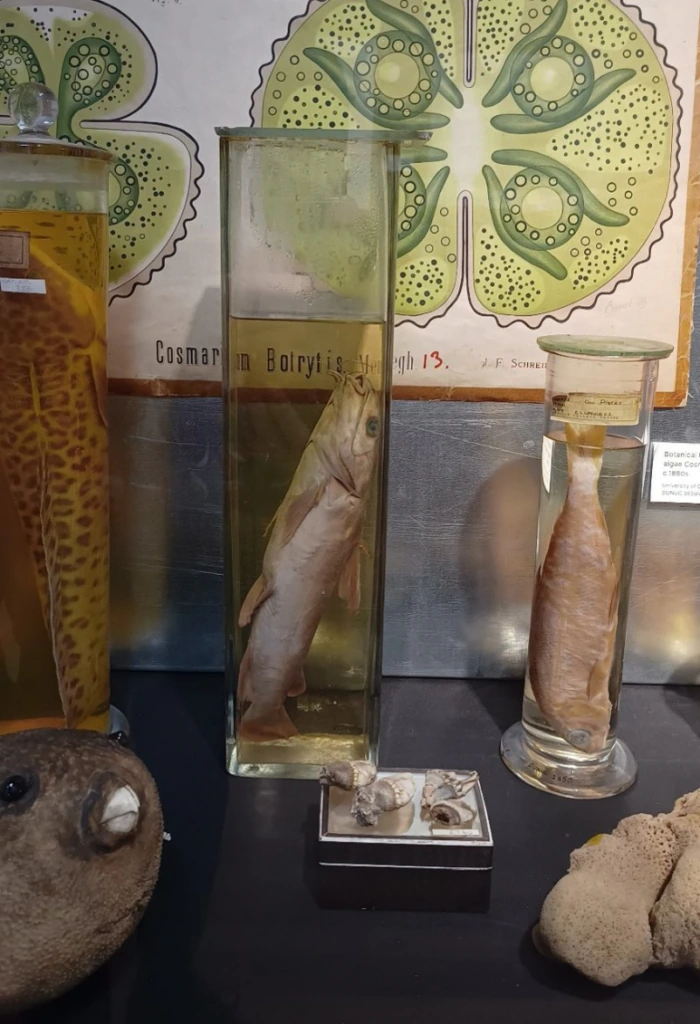
In addition to the artworks created specifically in response to this research, the exhibition features a range of water-related artworks, artefacts and specimens from the university’s museum collections.
Flow allows time to pause and think about the history of climate in a particular region. It doesn’t overwhelm, as so many exhibitions on climate change can do, but rather focuses the mind on the path of water and how that alone has experienced change over the years. By allowing time to dwell on a particular change brought about by a changing climate, it brings the potential impact home for exhibition visitors.
Flow also highlights the unique importance of archives and collections in acknowledging historical climate data and information, and uses this to inspire and raise important questions regarding the changing waters around us.
There is a certain irony in writing about an exhibition focused on water and flooding when Scotland is experiencing its driest period since 1964. This may serve to highlight the changes our water and climate will continue to experience, and how museums and archives have an important role to play in climate change as we move forward.
Flow is an exhibition curated by Jean Duncan, artist in residence at the Unesco Centre for Water Law, Policy and Science. It is exhibited in the Tower Building of the University of Dundee and can be accessed by members of the public Monday to Friday, from 9.30am to 7.00pm (last entry 5.00pm), until 25 July 2025.