Social justice and Fair Work are at the heart of what we do at the Scottish Crannog Centre. We believe that everyone should have the same opportunities to be all that they can be and we want to forge an equitable community in which anyone can actively participate. This is a people-centred approach that works towards creating a society where everyone can express themselves, contribute, be valued and be happy.
Since fire destroyed the reconstructed Crannog in 2021, the Scottish Crannog Centre has been on a journey to survive. We moved to a new site and faced seemingly insurmountable challenges, including a flood, rising costs, funding bids, illness, building delays and more.
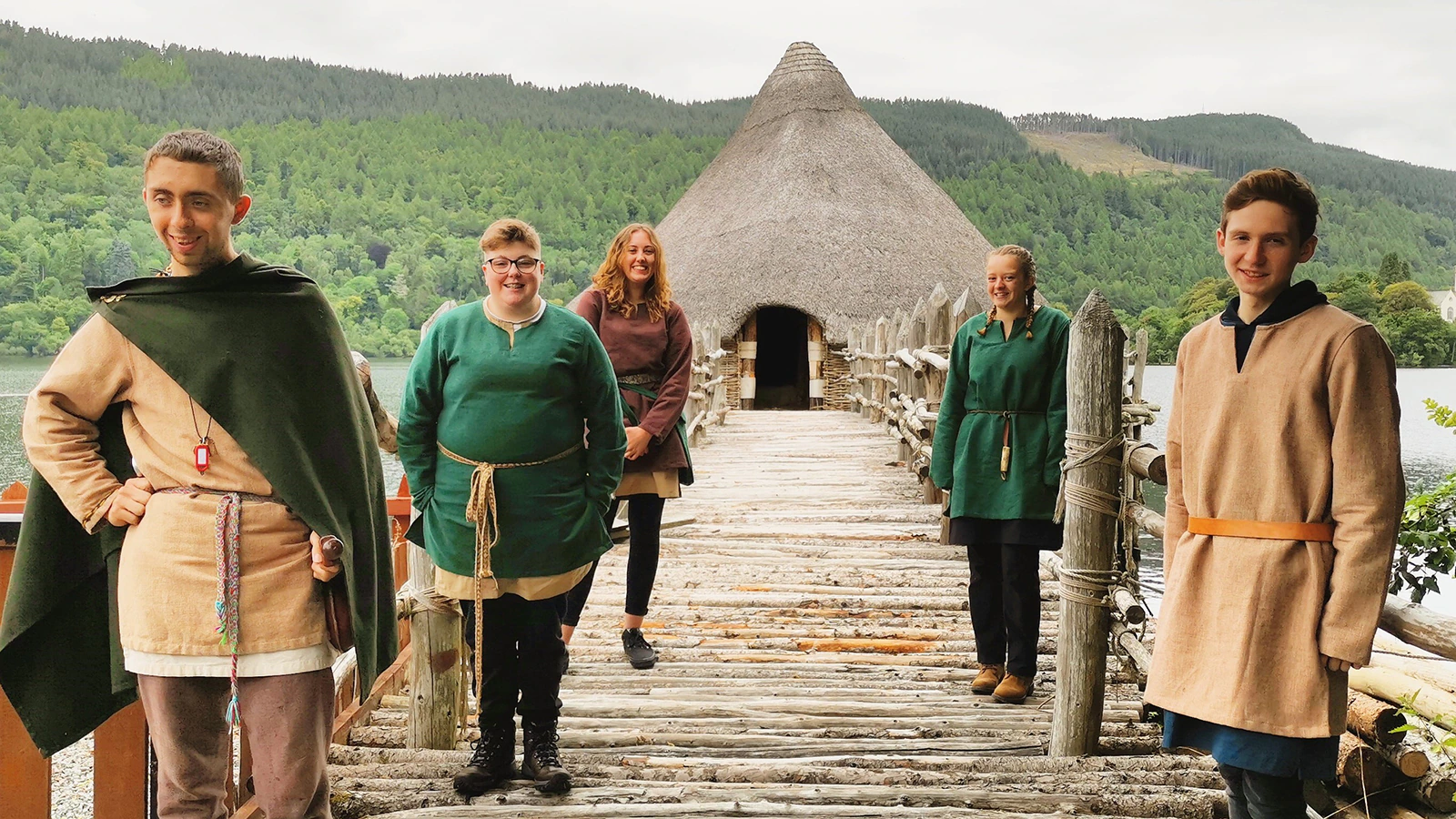
Yet in under three years we managed to open our doors to the public with a new museum, having engaged and trained craft fellows, apprentices and volunteers in traditional skills, totalling 20,000 volunteer hours in one year.
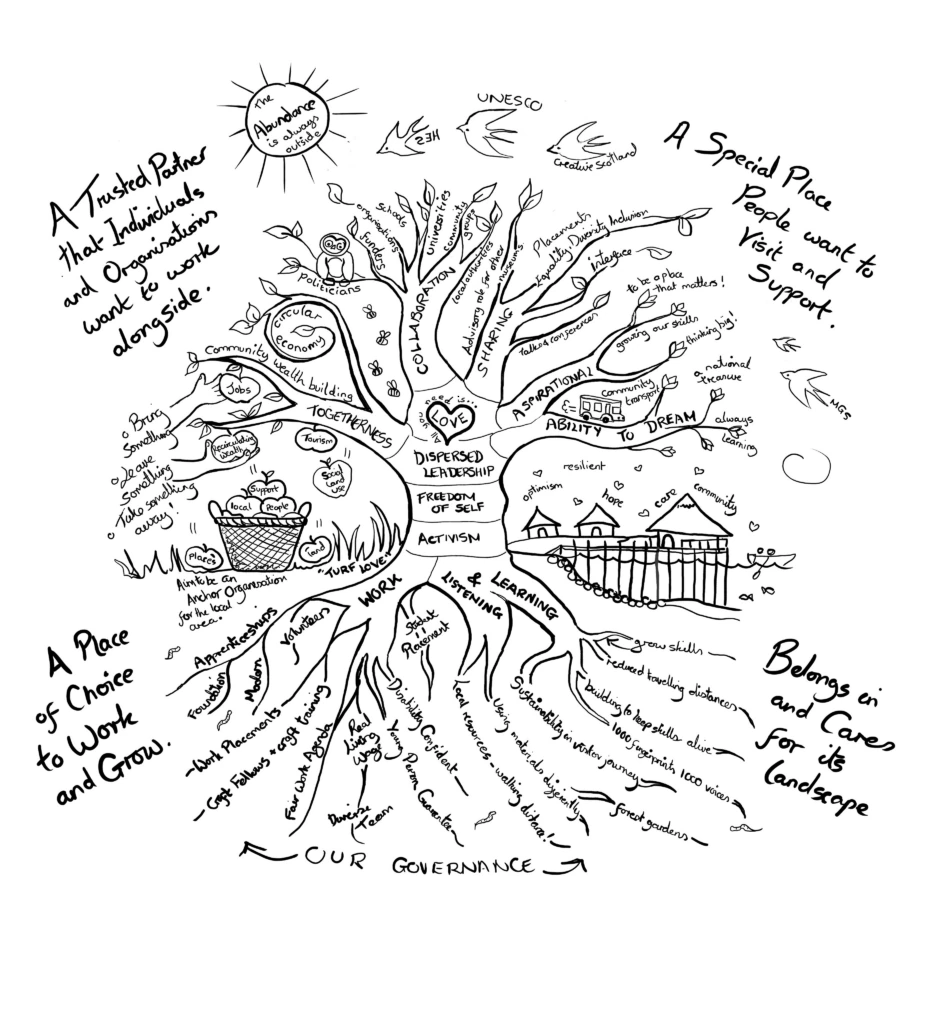
We take a cooperative approach, co-designing who we are and what our purpose is – developing a shared language. Shared values encapsulate this, as does our shared care for each other and for the collection of 2,500-year-old objects that we hold in our museum. From volunteers to the director, these values are lived ones: led by a culture and a community, not an agenda or policy.
We have championed sustainability and not backed down when pushed to choose less sustainable options. Our four pillars of sustainability support this: to be a place of choice to work and grow; a trusted partner that individuals and organisations want to work alongside; a special place people want to visit and support; and a place that belongs in and cares for its landscape.
The museum is designed and built by and for the communities we serve – local schools, charities and organisations, apprentices, refugee groups, mental health groups, our partners, Museums Galleries Scotland, Historic Environment Scotland and others.
Advertisement
We combat the loss of traditional skills and upskill people from areas that are the most deprived of access to training in Scotland. This fulfils a local school need, combating limited pathways and the lack of meaningful, year-round employment in the local area.
We employ refugees, people granted the right to work, single parents and people with additional support needs who are all supported as part of a diverse and flourishing team. Fair Work practices are upheld and we are a real living wage employer.
We believe that the best way to connect to the diverse audiences outside our doors is to be a diverse team within them, creating and sustaining opportunities for people of different abilities, ages, sexualities and backgrounds.
A diverse workforce is not something that is ‘nice to have’, nor a corporate responsibility – it is a core asset for the progress of the centre. We aim to create an organisation where there are a thousand fingerprints and a thousand voices involved in everything we do.
Our staff have the freedom to explore their own interests within their role. For example Toby, one of our apprentices, became interested in woodturning during his digital marketing apprenticeship. He has since produced in-depth museum interpretation and displays on woodworking and is now training with green woodworking mentors on a new NPA qualification we have developed.
We have successfully implemented a new shared leadership model, moving away from linear models of hierarchy to create a place where different people lead depending on the situation.
Advertisement
Developing our new museum really put this to the test. We co-designed with over 30 craftspeople, artists, architects, structural engineers and archaeologists to plan, design and build our Iron Age village. We encouraged staff to own their actions and decisions and not be afraid to try.
This process was challenging for members of the team, and we worked with Perthshire Autism Support to help us with training and implementing extra support for those who needed it.
We can always do more. Working as a Disability Confident Leader and holding the Young Person's Guarantee, we are constantly reflecting, evaluating and making tweaks to keep us nimble and able to respond rapidly to change.
Rachel Backshall is assistant director at the Scottish Crannog Centre.
Image: Young apprentices at the Scottish Crannog Centre prior to the June 2021 fire