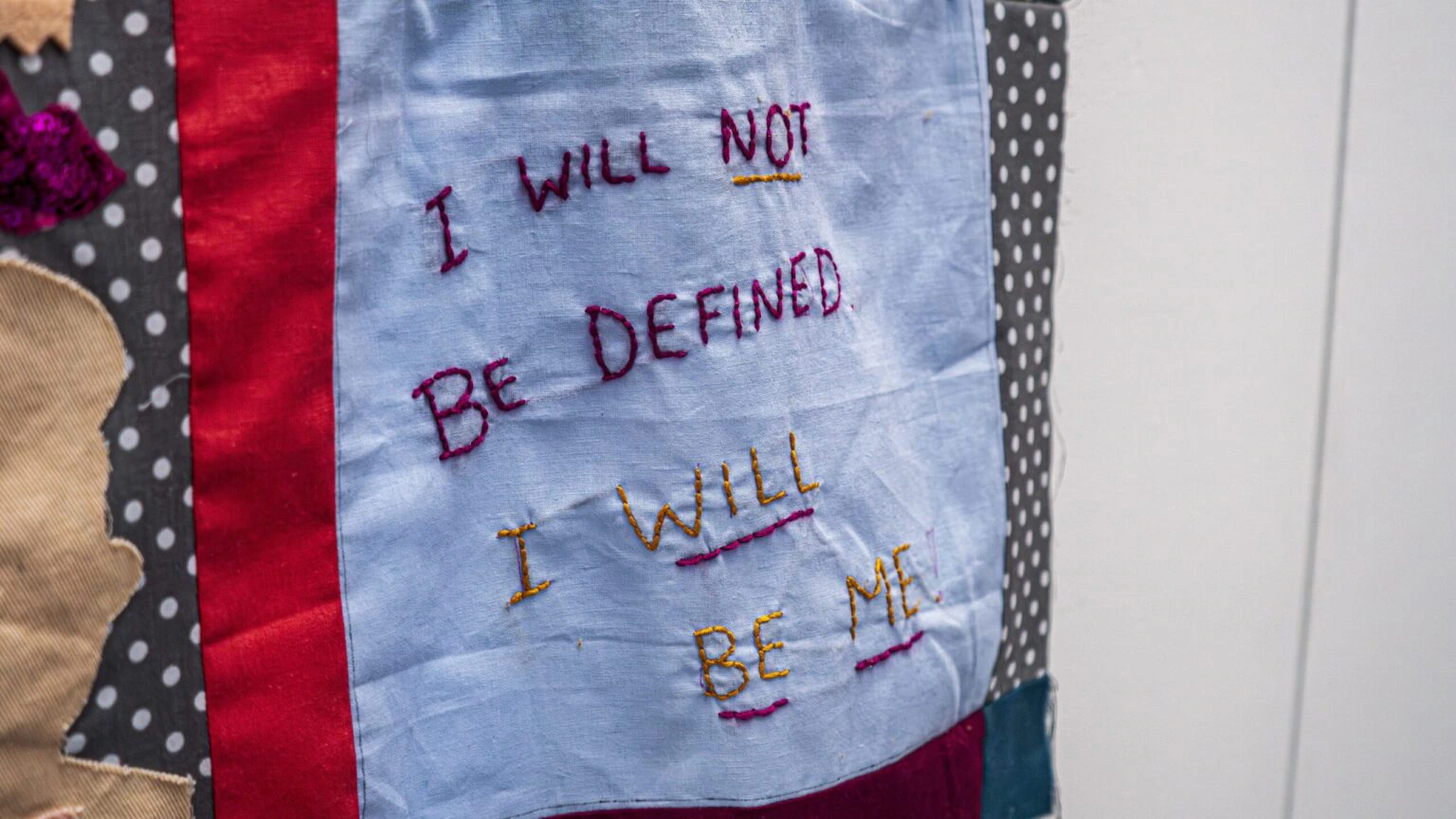
As a museum, we are always looking for ways to develop narratives of marginalised histories, and to diversify our gendered representation. Our collection is often associated with male-dominated activities such as war and hunting, and sports such as fencing and jousting.
Many of the stories that we tell focus on how men – and, almost exclusively, white cis men – have shaped the development of arms and armour throughout history.
Of course, we know that it is not just men who have played an important part in this, but also women and LGBTQ+ people whose stories have remained hidden. Forgotten Battles: Gender in the Armouries gave us the opportunity to redress this imbalance.
The project began with a sword that we hold in our collection gifted by the Chevalière d’Éon, a French soldier who, although assigned male at birth, spent decades living openly as a woman.
We invited members of the local transgender community to visit the museum to learn more about this sword, and the feedback that we received from the participants was that they wanted to find out more about other aspects of the museum’s collections that related to gender history.
After getting funding from Leeds 2023 as part of a year-long celebration of culture in the city, we started working with the wider LGBTQ+ community in January 2023 to research and present hidden stories in the collection that bring narratives around gender and queer history to the surface.
Advertisement
We worked with Kit Heyam, a writer and heritage practitioner specialising in queer history, who developed the Gendering the Museum toolkit to support museums to diversify gender representation.
As someone who identifies as queer, Kit's role as co-leader on the project was crucial in building trust with the local LGBTQ+ community and ensuring that the queer voice was given equal status in a space where the museum already has more hierarchical power over discussions.
The exhibition and trail also includes the Flintlock Military Musket, which was nicknamed “Brown Bess”, an 18th-century term for working-class women. The nickname suggests reliability and some soldiers described themselves as being married to their guns.
Through the project we developed a community-led approach to research and delivery by putting the collection and skills into the hands of people with lived experience.
This work is part of a wider strategy to give those from minority groups a voice, and empowering them to research, write and share narratives of their own history. We’re adopting an ethical, people-centred approach to community engagement in which all engagement is done with – rather than to or for – communities.
We hope it will make our collection more accessible to a wider public by attracting new visitors, especially those from marginalised groups who will see themselves represented in the museum’s collection for the first time.
Advertisement
We also hope the project will destigmatise and improve the dialogue around gendered history, in turn having an important social impact, particularly for LGBTQ+ people whose history is often denied or erased.
The museum has recently launched Armouries 700, a programme of major capital projects and initiatives that includes a refurbishment of the permanent galleries.
It is projects such as these that will bring our stories to life and contribute to the ways the collection is displayed and interpreted in the future.
Rob Freeman is community engagement officer at the Royal Armouries Museum.
Image: An embroidered patch reads, 'I will not be defined, I will be me'