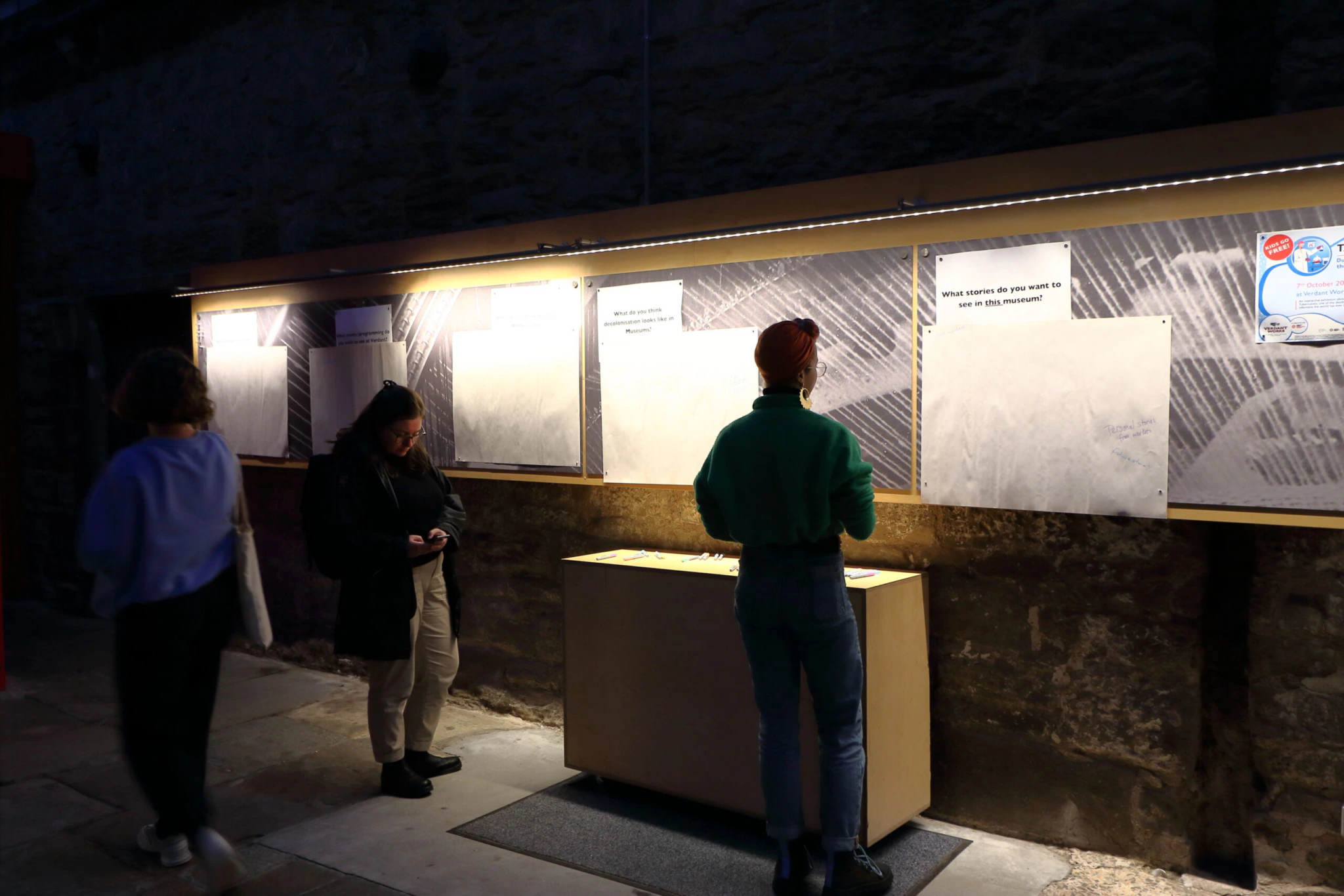
Disruption Nights are an audience feedback tool used at Dundee Heritage Trust (DHT) to give agency to audiences and offer them an opportunity to provide reflections on current galleries in an engaging way.
A Disruption Night has a very simple principle at its heart: to listen. Each session has been slightly different, but the core element is participants exploring the space as a visitor would experience it, without volunteers or staff – so that they don’t feel like they're being watched.
In preparation for the event the learning team, including our design student placement, Kate Wilson, ran a practice event with a group of Kate’s peers. This event was helpful as it allowed us to understand what elements worked well and where we could learn more.
DHT looks after two museums: Verdant Works, a former jute mill, and Discovery Point, home of historic Royal Research Ship Discovery. The first Disruption Nights were based at Verdant Works. Verdant opened after-hours for free, inviting people who both knew and loved the museum and those who had never visited before to give their opinion openly, with access to galleries and staff who wanted to know their thoughts.
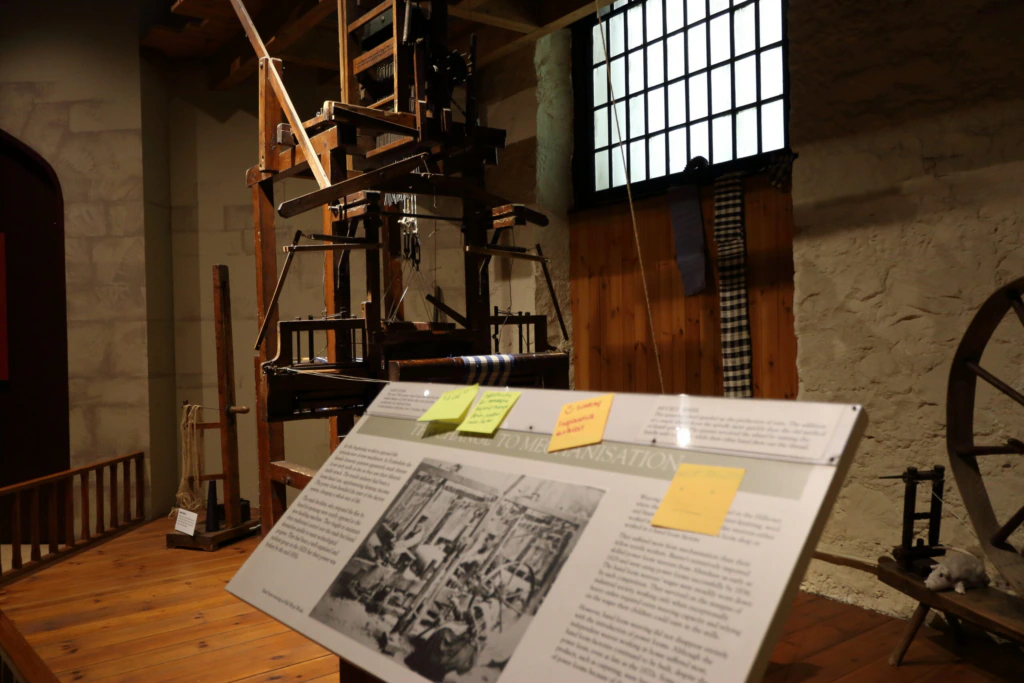
There was a bar, serving hot, cold and alcoholic and non-alcoholic drinks, and we encouraged visitors to bring their whole families along. The evening worked on a self-guided basis, allowing our guests to dip in and out of experiences over two hours, with a friendly face never too far away.
Advertisement
The core activity was the opportunity to go around the museum and place anonymous Post-it notes where they felt compelled to respond. Participants were greeted by a member of staff explaining the task and that feedback could include drawing, writing – even swearing – or whatever language they chose. The most important thing was honesty.
Despite being after-hours and self-led, visitors stuck to the ‘usual’ way of going around a museum, respecting closed doors and roped off displays. There was a fear that comments might be negative and demoralising, however visitors gave feedback in good faith because they wanted to improve the museum experience for everyone.
This process helped garner curatorial support, which was critical to the project as outcomes largely involved changing the content of the museum. Having curators engaged in and contributing to the process from the outset helped achieve our goals.
We also invited three artists to creatively respond to the space: a musician, a poet and a public historian. These interventions allowed participants to consider other perspectives about the museum in different mediums.
We provided large sheets of paper with prompts (e.g. Who is this museum for? What stops you visiting museums? What would make you come back here?) to encourage participants to give feedback. Visitors were able to move around the spaces as they saw fit, grab refreshments and sit down in a quiet area.
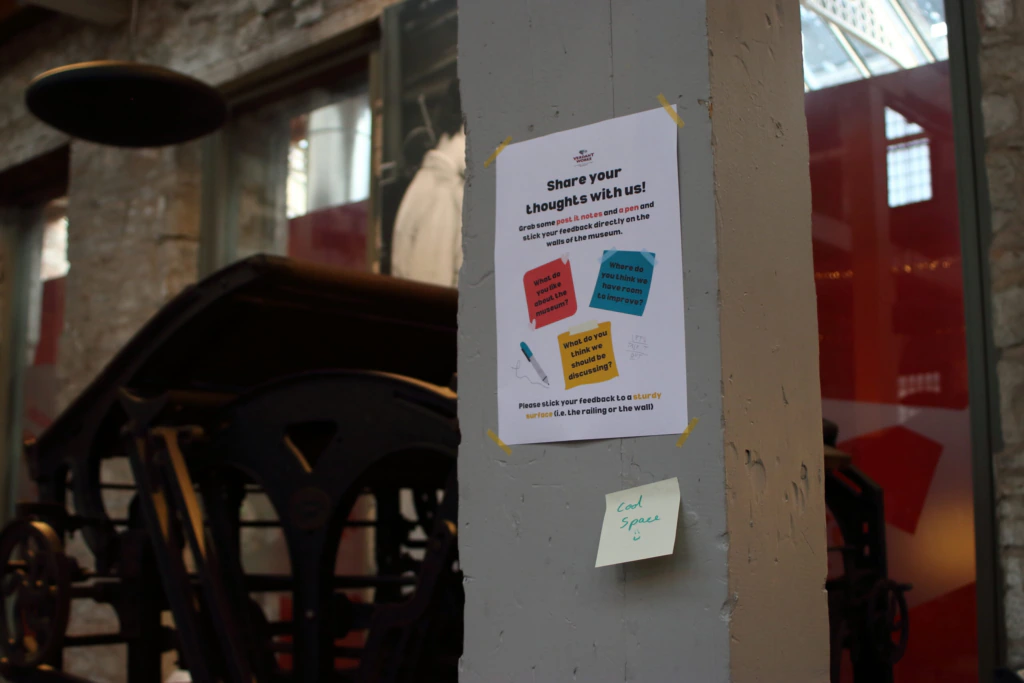
The outcomes of the project have been far-reaching. We were awarded a Museums Galleries Scotland small grant for a project to do a light refresh and update our gallery technology. The Turtleton Trust have also funded a co-curation project which will refresh Verdant Works’ India Gallery. The feedback has fed into feasibility studies and established new community relationships which have led to discussions on further projects.
Advertisement
We have also led targeted Disruption Nights with community groups including Dundee International Women’s Centre and a local secondary school. These have had mixed success, for example some groups really struggled expressing their thoughts and needed inspiration, meaning their responses felt less authentic.
Through the experience, staff are more on board with the idea of gathering feedback and we have become far more adept at receiving and actioning feedback on the museum experience from visitors who aren’t our typical audience.
Our hope is that, going forward, the long-term legacy of this project will be an increase in the number of non-traditional visitors and an increased sustainability of our museums overall.
Kim Turford-Mowat is education and communities coordinator at Dundee Heritage Trust.
Image: Visitors in a gallery space at a Disruption Night