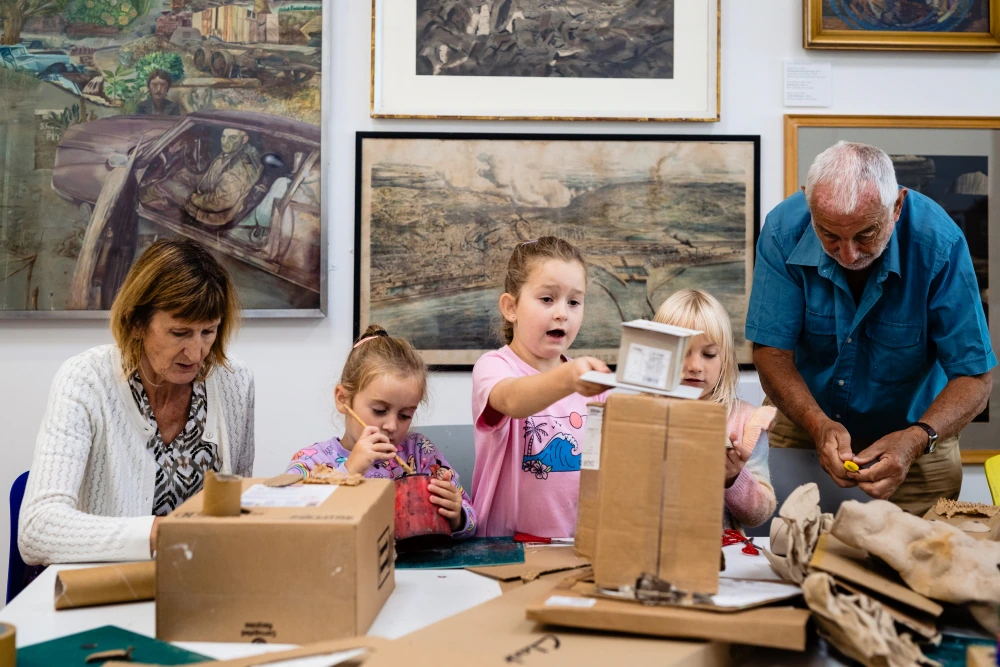
The idea for this project began in 2018 with an exhibition entitled Swansea Stories, which was developed in response to requests from our visitors who wanted to see more of our permanent collection on display. We did just that, mounting a large-scale exhibition which would focus on those works in our collection that directly represented the city and people of Swansea.
The exhibition was deliberately curated with a very light touch to leave space for people to make their own connections to the artworks and the stories they tell about their city. We decided upon three core themes – city, people, coast.
The exhibition included around 280 artworks – paintings, drawings, prints and photography – historical, modern and contemporary. Artists included Ceri Richards, Richard Billingham, Alfred Janes, Rut Blees Luxemburg, Ernest Zobole, Will Evans, Peter Finnemore, Josef Herman and Kyffin Williams to name a handful.
Visitors loved it – with some writing to the local newspaper to ask for it to be on permanent display! While it was successful, it was also problematic, showing us clearly the gaps in the collection and the nature of who and what is and is not represented.
A clear example of this was the “people” section – the sea of white faces of a particular class, mostly painted by white men, made it clear that it did not represent the diversity of Swansea’s communities. There was also a lack of work by artists of colour and women. We continued to discuss and question how a city’s art collection could be useful and relevant to the everyday lives of its people, and asked: how does it hold and help create diverse and representative cultural memories?
More importantly: how do we involve local audiences and communities to help us gather knowledge, co-create displays, co-produce interpretation materials and help fill in historical “gaps” through acquisitions and commissions? For a small team committed to inclusion across all its programmes – temporary exhibitions, commissions and learning and outreach – the collection was the elephant in the room.
Advertisement
The task of democratising seemed overwhelming especially when our collection includes over 12,500 works. Focusing on a smaller number of artworks that specifically relate to Swansea gave us a way in to create new ways of working that could then be applied to the wider collection.
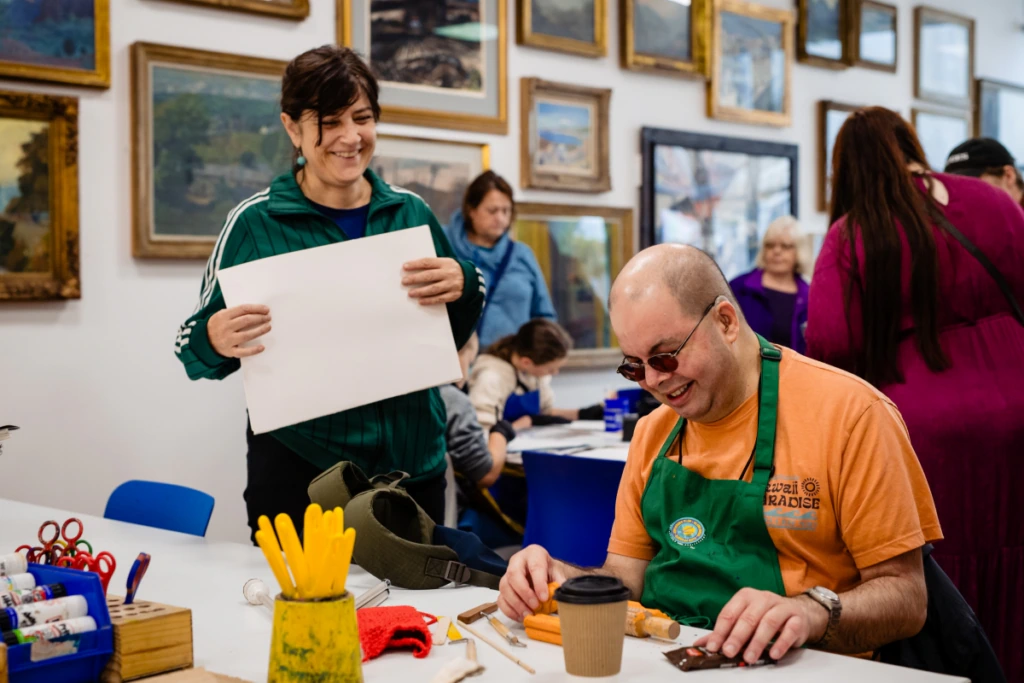
Over many years we have been inviting artists, curators and art historians to creatively respond to our collection, for example exhibitions such as Sophy Rickett, The Curious Moaning of Kenfig Burrows; Carlos Bunga, Terra Ferma; and Owen Griffiths, Thinking Green all use our collection as starting points.
But we began to realise that while we were working closely with the community through our learning and outreach programmes, we were not considering the deep knowledge, memories and stories they hold, and how bringing them to the fore alongside the artists, art historians and other professionals would help us create more democratic, inclusive displays.
How are we involving communities in the aim of creating more democratic responses? Like storytelling itself, there are many approaches, perspectives, memoirs, fictions and reflections.
We are taking a multifaceted approach which will produce an interconnected cacophony of voices. Central to this is working with a wide range of local people, creating conversations and workshops and inviting them to select and respond to works in our collection.
Advertisement
Simultaneously we are launching a series of talks about the history of Swansea in response to works in the collection. The invited experts will also work with the community groups to share knowledge, answer questions, consider themes and identify new areas of research.
We will record, film and invite participants to co-curate displays and interpretation. This will happen both on and off-site – for example, a painting of the Loughor estuary on the outskirts of Swansea recently inspired a workshop for one of our community groups in the place it was painted. The participants used the workshop as a catalyst to discuss the work, the landscape and the history of that place.
In our exhibition Cliffs, Coves and Cockles: Picturing Gower, curated by local art historian Kirstine Dunthorne, we asked visitors to write a postcard sharing a story inspired by one of the paintings on display. These were invaluable personal and collective memories which could then be shared with others involved in this process.
We are also creating a dedicated Swansea Stories gallery to enable co-production and curation from many perspectives. It’s incredibly useful to have been awarded an Esmée Fairbairn Communities and Collections Fund grant, which is enabling us to try multiple approaches and go deeper.
The gallery is here to display and care for the city art collection – it is a living, breathing thing, and we want as many people as possible to feel that they are part of it.
Karen MacKinnon is curator at Glynn Vivian Art Gallery, Swansea.
Image: A workshop at the gallery, courtesy of Polly Thomas