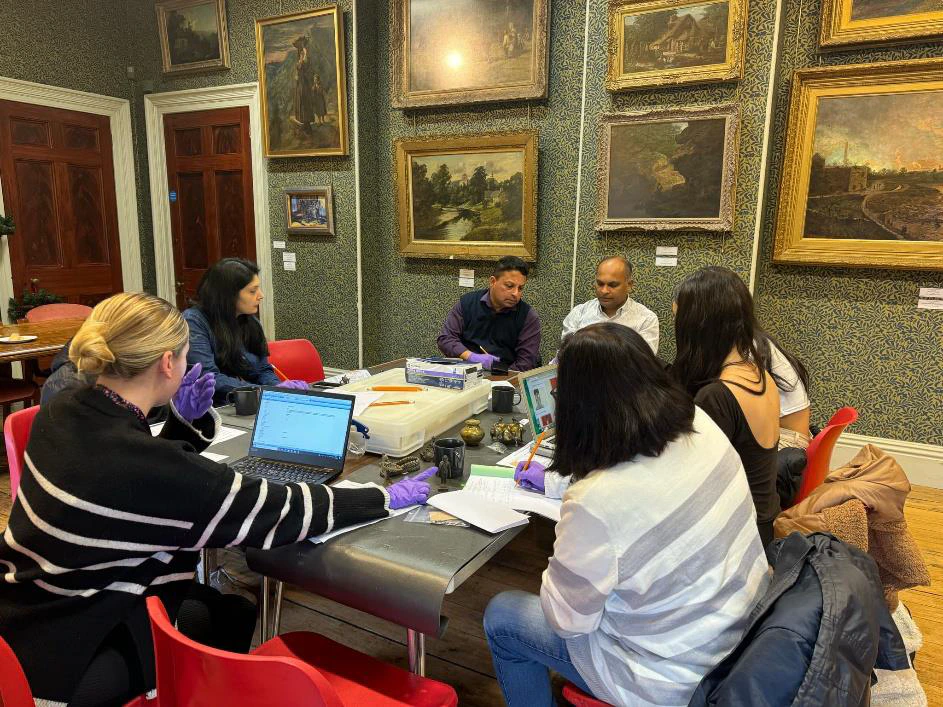
A collections-scoping project that embedded anti-racist practice through collaboration
Bridging Cultures was developed as a continuation of Time for Tea, a project that was supported by the Welsh Government’s collections-scoping initiative to identify colonial collections held within Welsh museums.
Following a successful application to the Welsh Government for a capital grant, that project focused on supporting the delivery of the Anti-racist Wales Action Plan (ARWAP). Our aim for Bridging Cultures was to maintain the momentum gained from delivering Time for Tea. The team were keen to see positive ARWAP objectives embedded into Cyfarthfa Castle Museum and Art Gallery’s permanent galleries rather than treating it as a standalone project.
To achieve this, we strengthened our partnership with the Indian Heritage Centre UK, formed during the initial Time for Tea project. As part of Bridging Cultures, the artist Daniel Trivedy was commissioned to create a contemporary response to objects from and linked to India within the collection.
Collaboration was central to the project – from the outset, partners were given genuine ownership and curatorial input, ensuring their perspectives shaped both the narrative and display.
Together, we explored the journey of tea from India to Wales, examining the environmental and social impacts of tea cultivation, as well as drawing parallels between tea tokens and the truck shop tokens used within South Wales’ industrial communities – this naturally complemented other key exhibitions within Cyfarthfa, but allowed a light to be shone onto some of the realities of empire.
Advertisement
Throughout this process, with the Indian Heritage Centre, we reviewed the collection and identified relevant objects, or in some cases reidentified those that had been mislabelled. Together we were able to highlight objects that should not be displayed due to cultural concerns and considerations such as religious beliefs, and document them as such in the historic record.
Community engagement formed a key part of the project. Working with local schools and community groups, we delivered Indian dance, wellbeing and cultural workshops alongside opportunities for conversation over tea and samosas.
These activities supported the Curriculum for Wales by encouraging learning across the humanities and expressive arts, while promoting ethical citizenship and cultural understanding.
The project resulted in a permanent gallery display that captures the journey from Time for Tea to Bridging Cultures, creating a lasting legacy for visitors and communities. One of the most significant lessons learned was the value of sharing authority and creating space for communities to shape how their stories are represented.
The display now serves as a visible commitment to ongoing decolonisation work, supported by a world map highlighting the global origins of colonial-era collections and holding the museum accountable for continuing this important work.