We're delighted to confirm the facilitators for our Anti-racist Museums Programme.
Cheryl Garvey and Julian Walker will develop the intensive participatory experience for six museums, with a programme of bespoke online workshops for museum managers and leaders to support the development of a second cohort of anti-racist museums.
This is part of a wider programme of activities that seek to tackle institutional racism in the sector. The programme will use techniques such as coaching, facilitation and peer learning to support organisations to embed the necessary changes for their institution to become anti-racist.
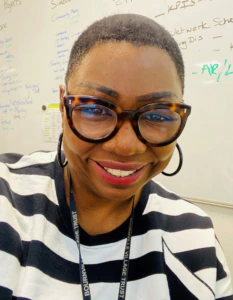
Cheryl Garvey
Cheryl Garvey is Birmingham born and based, and has spent her career working in the charity and private sectors, holding executive and CEO roles for key local, regional and national charities.
Cheryl began her career in youth and community development practice and currently specialises in equalities, organisational and leadership development and facilitation. She works with a range of audiences, from large-scale public institutions to vibrant non-profit micro-businesses. Cheryl is trained in Deep Democracy and Process Work methodologies and is currently adding psychotherapy to her skills arsenal.
Advertisement
On her appointment, Cheryl said: “The work to realise an anti-racist culture future, the kind that is honest, disruptive, emergent and embodied, is difficult stuff but unbelievably rewarding when you see growth in self and system. I’m delighted to collaborate with the MA on this new and exciting programme. The sector’s role as custodians and architects of our collective histories has rarely been more acute.
“We make no promises regarding the protection of comfort or safety, for they are rarely deployed in service of the oppressed. We can promise a space full of compassion, commitment and an unerring ambition for each of our participants to leave the programme with greater confidence, capacity and courage to make anti-racism real.”
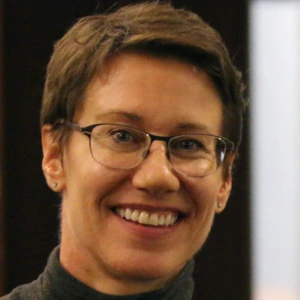
Julian Walker
Julian Walker began her career as a Home Office civil servant before the first Blair government. She served as a speechwriter to both Michael Howard and then Jack Straw, before leaving Whitehall in 2001 to become a self-employed consultant.
Over 15 years in public sector improvement – working in UK central government and in Afghanistan, Libya, Palestine, Rwanda, Sierra Leone, South Sudan, Turkey, Tunisia, and Uganda – she learnt experientially of the global nature of white privilege; the long after-effects of colonialism; and the tendency for ‘help’ to come in a form that allows helpers to feel better about themselves more often than it helps the ‘helped’. She also learnt that the gap between political leaders’ ambitions and the systemic results they can achieve is a global phenomenon.
Since 2020 her work has focused on anti-racism learning and development for individuals, groups and organisations, working with brap and HR-rewired and as faculty on the NTL Global OD certificate programme.
Advertisement
Her critical examination of whiteness in service of anti-racism began 15 years ago when she was UK director of policy and research at Barnardo’s. As leader of the organisational race equality and diversity programme, she was given Peggy McIntosh’s 'White Privilege: Unpacking the Invisible Knapsack' by one of her team and challenged by the Black Staff Network to examine power and privilege, and never looked back.
Her work delivering anti-racism learning for the Museums Association feels like the culmination of all this experience, learning and passion for challenging injustice both globally and domestically.
About the programme, Julian said: “The work of dismantling systemic racism requires strong coalitions, between institutions and communities, across the sector and between individuals. It’s not easy for some to trust, or for others to become trustworthy. But we need to be able to develop authentic relationships between those who – historically and today – have received material and psychological benefits from colonialism and white supremacy, and those who have been marginalised, belittled and harmed.
“I am excited to have the opportunity to model what coalition looks like, and to help participants explore their own inner and outer work to make such collaboration a reality.”