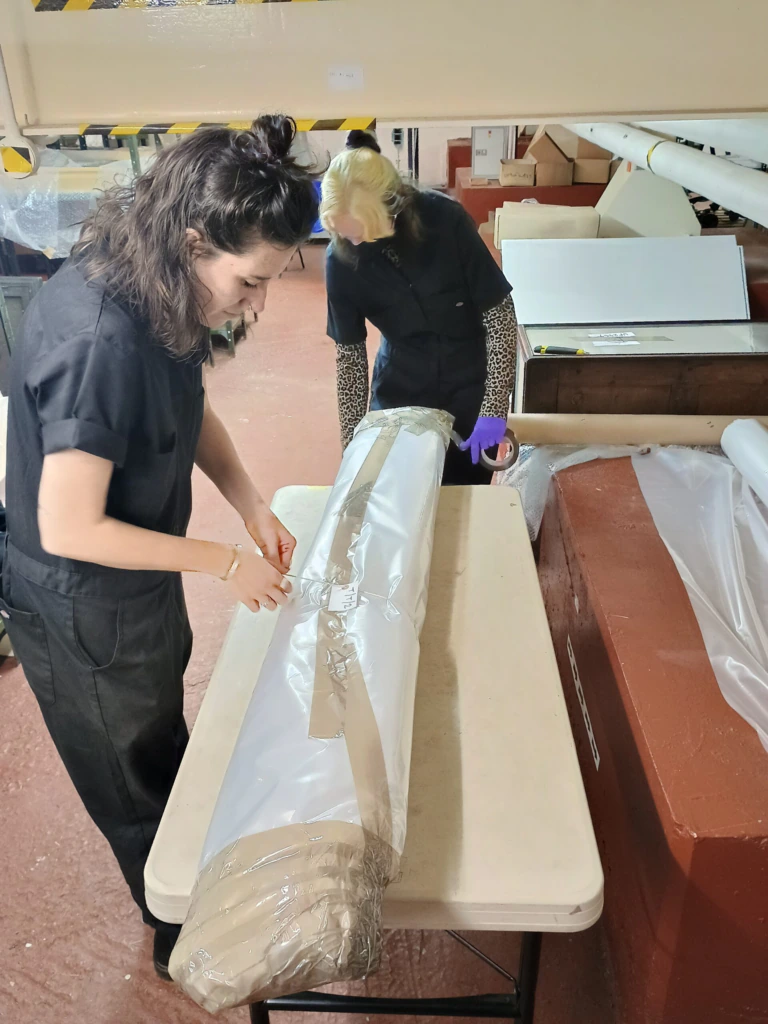
Clifton Park Museum recently disposed, reused and transferred around 400 objects.
The Rotherham Metropolitan Borough Council collections consist of around 75,000 objects which include items that are unprovenanced, non- Rotherham provenanced, duplicates or beyond economical conservation. Although the museum was aware of this, an enforced store move made the need to tackle this even more urgent.
Lots of these objects were identified as Objects of Uncertain Ownership – or “orphan objects’’. Previous Accreditation feedback had highlighted the requirement to process these objects, but as a local authority museum, disposals had to adhere to council processes.
The team created a risk assessment covering the risks and mitigations against potential disposals and a procedure to mitigate against potential future claims. The service’s acquisitions and disposals panel approved around 100 objects for transfer and disposal.
The team then produced a report to ratify this, which was then approved by RMBC’s culture, sport and tourism department, published in council minutes and on the council website. This resulted in the approval needed to ethically dispose of the objects.
Advertisement
The first round of disposal received no response from the public, but the second round received some mixed feedback. Community members were curious about the disposal project.
To address this, the team created guidance for front-of-house staff on the project, addressing ethics and why the disposals would result in better care for existing collections. They also committed to sharing the positive outcomes on social media, for example the object conservation performed on objects due to the store move.
The project had a positive effect on the collections. Many objects were recycled or repurposed for internal learning and audience development. This also enabled an improved understanding of the mechanics of collections management.
The museum now has a greater understanding and insight into their disposals procedure, incorporating the risk assessment to allow ethical disposal as part of regular, healthy collections management. This has relieved some of the pressure on storage space, ensured that items are better used elsewhere, and helped to prevent the collections from becoming stagnant in their relevance and use.