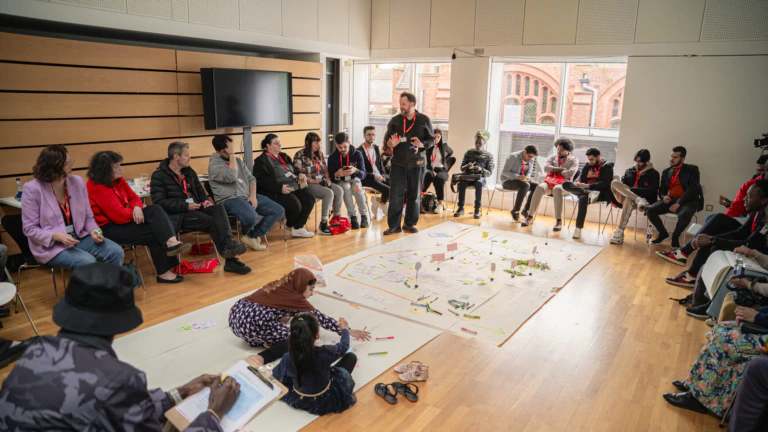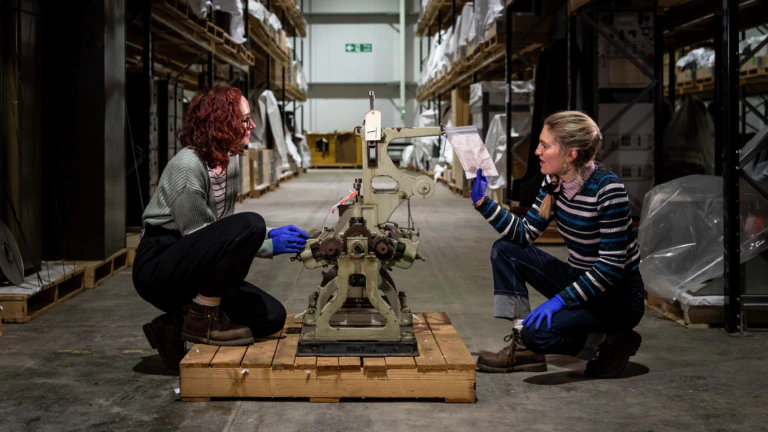
The Code of Ethics provides a framework for the practical application of ethical considerations to our everyday work in museums and reflects a contract of trust between museums and the public.
Below you can browse the answers to some of your frequently asked questions about the code.
What is the Code of Ethics?
The Code of Ethics provides a framework for the practical application of ethical considerations to our everyday work in museums and reflects a contract of trust between museums and the public.
Who does the Code of Ethics apply to?
The Code of Ethics is for everyone who works in and with museums, including volunteers, trustees, staff and freelancers, ranging from senior leaders to those just beginning their career. We also encourage you to share the Code of Ethics with communities you work in partnership with.
Why is the Code of Ethics aspirational?
The new Code of Ethics represents an aspirational approach to ethics in order to encourage and support reflective and responsible ethical best practice in museums. The code asks those who work in and with museums to meet and exceed minimum standards of practice and aspire towards ethical best practice.
Aspirational doesn’t mean that some parts of the code are optional but rather that everyone will be at different stages in the journey towards achieving them. While mandatory ethics are clear cut and can be precisely enacted, aspirational ethics may take time, ongoing investment and relationship building.
What does the Ethics Committee do?
The Ethics Committee develops and promotes the understanding of ethical principles, practice and issues within the museum community. The committee provides confidential advice on specific issues that arise in individual museums and acts as a sounding board and critical friend to promote good ethical practice in the museum community.
What can I ask the Ethics Committee?
You can ask the Ethics Committee questions related to all areas of museum work and ethical practice. This could include (but is not limited to) anti-discrimination, community engagement, collections partnership working, inclusion, decolonisation, sponsorship and fundraising, digital, workforce and governance. For all ethical queries, please contact our policy and ethics lead India Divers in the first instance.
Please explain more about: “Ethical standards in this document help to underpin the Accreditation scheme for museums in the UK at an organisational level.”
The Accreditation Standard is a handbook for running a successful and forward-looking museum and links directly to the Code of Ethics. The Museum Accreditation Scheme is undergoing a redesign so the MA will maintain a dialogue with Arts Council England to identify links and read-across as appropriate.
What part of the new code will be the most difficult for museums to implement, and what support or guidance is needed?
The answer to this question will be specific to individual museums and vary between organisations. The Ethics Committee is regularly asked to provide confidential advice on specific issues that arise in individual museums. The committee can act as a sounding board and critical friend to promote good ethical practice in the museum community. If you would like support from the Ethics Committee, please contact our policy and ethics lead India Divers in the first instance.
What does ‘ensuring financial sustainability’ look like in an ethical context in museums, heritage and culture?
Ensuring the financial sustainability of museums is important so that we can continue to serve communities, care for collections and value our workforce. We encourage museum leaders to consider what financial sustainability looks like in an ethical context at the museum they are responsible for, understanding that it will vary from organisation to organisation. The Code of Ethics asks museums and those who work in and with them to act responsibly to ensure their long-term financial, environmental and social sustainability.
Code of Ethics point 3.3 says: “Maintain public trust and integrity in all museum activities by exercising due diligence in partnership building, sponsorship and fundraising. Strive to secure funding from ethical sources that align with the values of the organisation and serve the best interests of communities.”
Point 3.4 says: “Transition away from sponsorship from organisations involved with environmental harm (including fossil fuels), human rights abuses, and other sponsorship that does not align with the values of the museum.”
Are there any examples of museums that have considered declining a gift or partnership for ethical reasons?
There are examples such as the following which were reported in Museums Journal:
Do we need additional ethical guidance for those who document or catalogue collections?
The Code of Ethics applies to all areas of museum practice and should be used as a framework to guide ethical decision-making when documenting and cataloguing collections. If you would like advice on a specific situation, please contact the Ethics Committee.
In terms of practical guidance, Collections Trust’s Spectrum primary procedures give tried-and-tested advice on collections management.
There is also a Cataloguing Code of Ethics which has been endorsed by CILIP.
A challenge for museums regarding collections sustainability is managing historic inward loans. How will the updates in the new code support this?
The Code of Ethics says museums should responsibly manage and care for collections.
Collections Trust’s Spectrum primary procedure for loans in advises there should be no ‘permanent loans’ in your museum; if there are historic loans you should renew them for a fixed period, try to accession the objects, or return them.
The MA’s Off the Shelf: A Toolkit for Ethical Transfer, Reuse and Disposal can be applied to non-accessioned collections such as loans where the process should also be undertaken with due diligence, formal decision-making and recording.
What ethical guidance exists in relation to human remains in museums?
The Code of Ethics for Museums asks museums and those who work in and with them to “be understanding of different religious, spiritual, and cultural perspectives when working with collections, particularly human remains and sacred items” and “be clear and open about why the museum holds human remains”. It also asks museums to “take an open, proactive and positive approach to repatriation and restitution” and “deal sensitively and promptly with requests whether from the UK or from abroad”.
The DCMS Guidance for the Care of Human Remains in Museums provides guidance for museums and other institutions in England, Wales and Northern Ireland that hold human remains in permanent collections. DCMS has announced a review of this guidance with a revised version expected to be published in autumn 2027. Museums Galleries Scotland has produced guidelines for the care of human remains in Scottish museum collections.
Does “not treating museum collections as financial assets” extend to image licensing?
The Code of Ethics is clear that museums should ensure that the financial viability of the museum is not dependent on any monetary valuation being placed on items in its collections. Unethical sales from museum collections and targeting collections as a source of income are unacceptable.
However, there is an important distinction to be made between selling collections for financial gain and income generation through initiatives such as image licencing, “adopt an object” schemes and charging for tours/experiences. Ethical considerations should be part of the decision-making process when developing income generating initiatives to ensure financial sustainability.